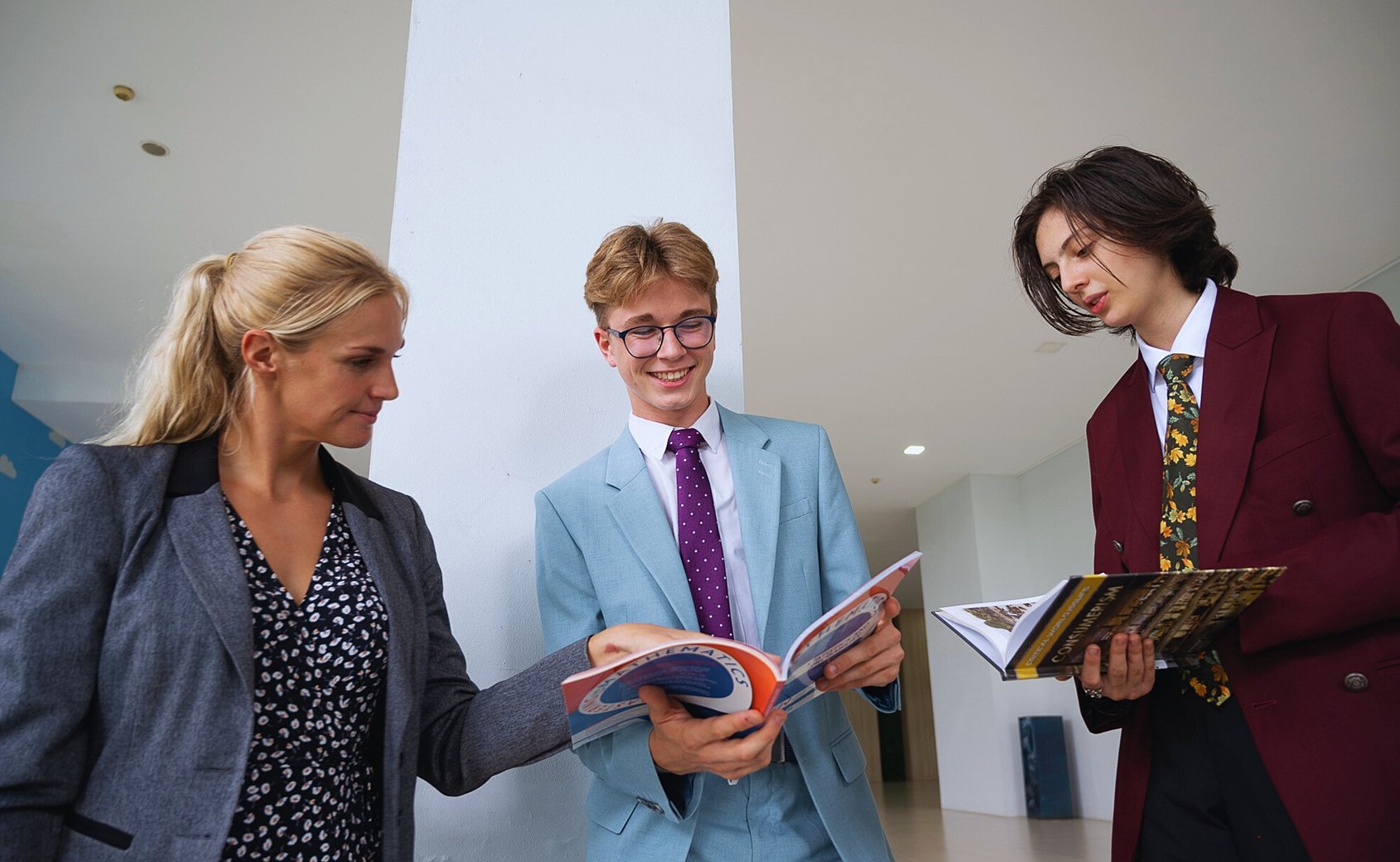

These subject specialists help to transform the lives of our pupils and instill a passion for learning. It is our dedicated staff body which explains why Brighton College Bangkok is one of the highest performing schools in the world.
We understand that our Sixth Form is an important bridge to university education. Therefore, our dedicated Sixth Form Team provides bespoke mentoring and support for our pupils going through the university application process. With pupils applying to the world’s most prestigious universities, our student body are winning places at some of the top institutions in the US, UK, Thailand and other countries worldwide.

There are 22 subjects to choose from for study at A-level including Art & Design, Biology, Business, Chemistry, Computer Science, Design & Technology, Drama & Theatre Studies, Economics, English Language, English Literature, French, Geography, History, Mandarin, Mathematics, Further Mathematics, Music, Physical Education, Photography, Physics, Psychology and Spanish.
Art & Design
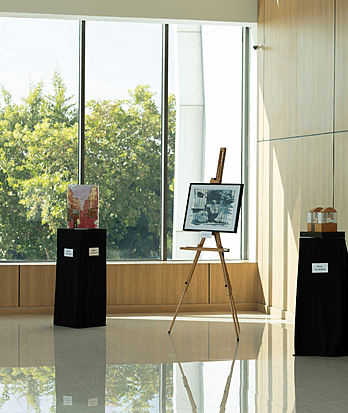
The Cambridge A Level Art course encourages pupils to explore their creativity and develop technical skills through a variety of media and techniques. The curriculum covers drawing, painting, sculpture, and digital art, with a focus on personal expression and conceptual development. The course culminates in an independent project, allowing pupils to showcase their unique artistic vision. Through this course, pupils gain both practical and theoretical knowledge, preparing them for further studies or careers in the arts.
Biology
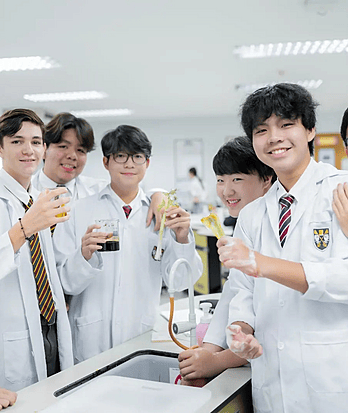
A-level Biology covers all aspects of life, from the cellular processes driven by organelles to the crucial role of plants and animals in global carbon and nitrogen cycles. It explores the complexities of human health and physiology, as well as the importance of biodiversity conservation for both humanity and the planet. Our goal is to foster an appreciation for the diversity and complexity of biology, inspiring pupils to go beyond the syllabus and become independent, curious biologists. They will gain an understanding of the challenges and innovations shaping the field in the 21st century.

Business Studies
The Cambridge A Level Business Studies course provides pupils with a comprehensive understanding of business operations and management. It covers key areas such as marketing, finance, human resources, operations, and the economic environment. Pupils learn to apply business theory to real-world situations, developing critical thinking and problem-solving skills. The course encourages an analytical approach to decision-making and prepares pupils for future business challenges. By studying business concepts, pupils gain a solid foundation for pursuing higher education or careers in business, entrepreneurship, and related fields.
Chemistry
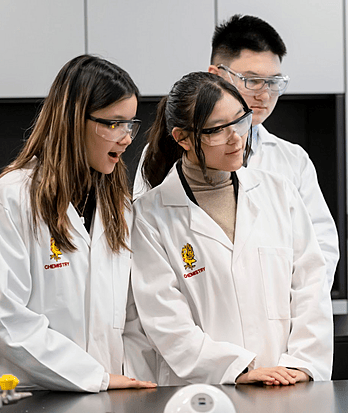
The A-level Chemistry course focuses on understanding the atomic structure of the 92 elements, allowing chemists to predict molecular reactions and properties. The chemistry department employs a teaching approach that emphasizes problem-solving and practical work, supported by our state-of-the-art science laboratories. The course builds a strong foundation in chemical concepts, encouraging pupils to use experimental observations to shape their scientific thinking. It covers both organic and inorganic chemistry, providing pupils with a comprehensive mastery of key areas and preparing them for further study or careers in the sciences.
วิทยาการคอมพิวเตอร์
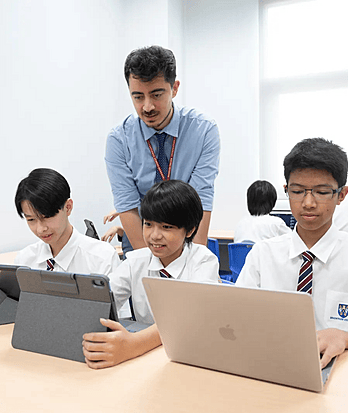
The A-level Computer Science course encourages pupils to develop problem-solving skills using computational methods. It provides a strong theoretical foundation in areas such as computer architecture, network technologies, databases, and digital ethics. Alongside this, the course offers a practical focus, leveraging local industry connections to enhance pupils' understanding of software development principles. Pupils will also explore key techniques and algorithms for creating functional and effective computer programs, preparing them for further study or careers in technology and computing.
การออกแบบและเทคโนโลยี
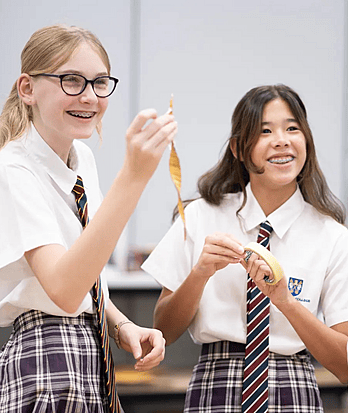
A-level Design and Technology provides a dynamic learning experience based on academic and practical training. The course encourages pupils to develop and sustain their creativity, working on building innovative practice while recognising and overcoming challenges and constraints when producing high-quality products. A mixture of practical, workshop-based work and theoretical learning, the A-level allows pupils to develop an understanding of contemporary design and technology practices, using digital technologies and information handling skills to enhance their design capabilities.
Drama & Theatre Studies
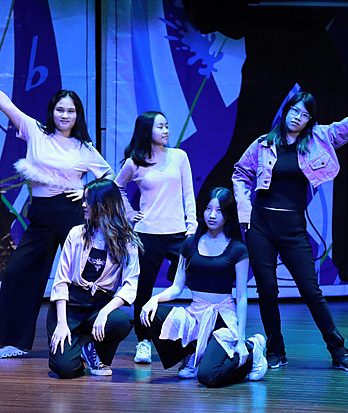
A-level Drama and Theatre offers the opportunity to take a course of study that develops imagination, fosters creativity and promotes a complete understanding of theatre and performance. The course is comprised of three parts: text in performance (a written component, where pupils study three texts from the perspective of a director, designer and actor); text in action, where pupils perform, direct or design a scripted play; and theatre workshop, where pupils produce their own reinterpretations based on an extract from a published work. Pupils spend much of their class time on their feet, discovering new ways of engaging with a live audience and bringing a script or idea to life with originality and precision.

Economics
Economics at A-level has a lot more to it than just ‘money’! At the heart of economics is the concept of scarcity. Societies have to decide how to distribute resources, given that there is not enough for everyone to have everything they want. Should resources be allocated by the market (the infamous ‘law of supply and demand’) or should the state take charge in the name of ‘distributive justice’? Most economies are based on a mix of these two methods, and the A-level in economics allows pupils to explore varied economics theories and their practical implications, with thought-provoking and current discussions a mainstay of the classroom.

English Language
The A Level English Language course builds upon the skills and methods of language analysis previously developed in the IGCSE course and prepares pupils for their next steps. Pupils are introduced to the study of English in its various forms and contexts, exploring text-based and data-based sources of language. The variety of assessment styles used, such as data analysis, discursive essays, directed writing, original writing and research-based investigative writing, allows pupils to develop a wide range of skills.

English Literature
The A-level English Literature course enhances pupils’ knowledge and appreciation of literature from various periods and contexts. Pupils study up to eight texts, including poetry, prose, and plays, with key focuses on American literature, a Shakespeare play, and a comparison of pre-1900 poetry and drama. Lessons center around close textual analysis, evaluating alternative interpretations, and understanding literary texts within their cultural and socio-historical contexts. This approach fosters a deep understanding of the texts and encourages critical thinking and discussion.

French
A-level French enables pupil to contribute to discussions on the literature, film, art and history of France and participate in debates, give presentations and read French articles from authentic sources. Studying highlights of French-speaking artistic culture, heritage and cinema, pupils learn about political engagement and who wields political power in the French-speaking world. The course also explores the influence of the past on present-day French-speaking communities, allowing pupils to learn the language in the context of these countries and the issues and influences which have shaped them.
Geography
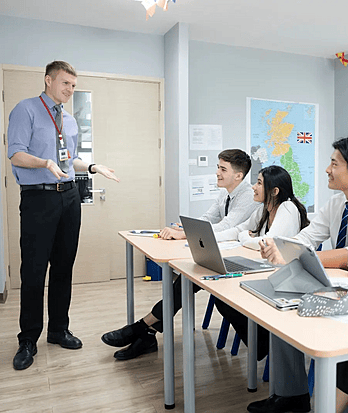
Geography as a discipline combines political, economic, and scientific perspectives to explore space and place in the modern world. The A-level course equips pupils with the knowledge and skills of a well-rounded geographer, addressing major issues like climate change mitigation, the concept of an optimal global population, and sustainable management of global commons such as oceans. The course covers both human and physical geography, with studies at local, regional, national, and global scales. Pupils apply theoretical models to real-world scenarios and conduct their own practical fieldwork, developing a deep understanding of the subject.

History
The A-level History course helps pupils understand the past by studying key themes like dictatorship, democracy, and the development of modern BritainIn Year 12 of A-Level History, pupils study the League of Nations, the rise of extremism, and the causes of World War II. They also focus on China and Japan from 1912-1945, examining Mao's Communist Party and Japan's rise. Year 13 focuses on dictatorships, studying Adolf Hitler, Joseph Stalin, and Benito Mussolini's regimes and domestic policies. Pupils also explore varying interpretations of The Holocaust, including Intentionalist and Functionalist theories, analyzing anti-Semitism and Nazi policies toward Jews during WWII.
ภาษาจีนกลาง
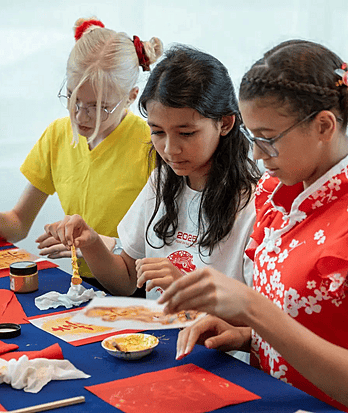
Mandarin is the most widely spoken language in the world and as such is an exciting part of our Sixth Form language offering. The subject is ideal for any pupil who has an appreciation of the language, literature, film, culture, current events and social issues of the Chinese-speaking world. The A-level draws on four themes: changes in contemporary Chinese society, Chinese culture, the evolving Chinese society, and the impact of reform in 1978. Pupils engage with these themes through the study of works of Chinese literature and films, as well as in their language practice, with lessons taught by native-speaking teachers.

คณิตศาสตร์
Both Maths and Further Maths are offered as A-levels, with Maths being a prerequisite for Further Maths. The courses focus primarily on core areas such as algebra, trigonometry, calculus, and series, alongside applied modules in statistics and mechanics. While many mathematicians enjoy solving mathematical puzzles for the challenge, our department also helps pupils recognize the practical applications of mathematics in daily life. We aim to develop the skills needed for pupils to engage with and contribute to these applications in the future.
ดนตรี
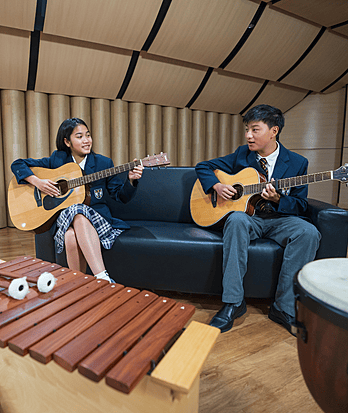
Music is a subject that blends creativity with academics, demanding active involvement in performance, composition (both original and in the style of established composers), and listening. Pupils also engage in the historical and analytical study of composers and their works. The course is structured into three modules: developing performance skills on a chosen instrument, completing a technical study and composition based on a specific brief or style, and exploring diverse musical genres such as vocal and instrumental music, film scores, popular music, jazz, and fusion.
พลศึกษา
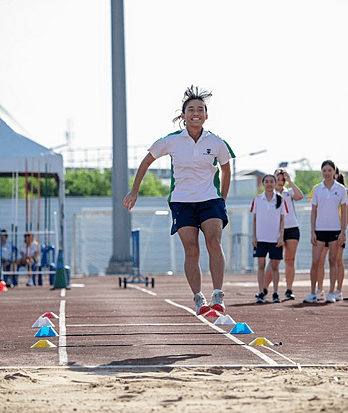
The Cambridge A Level Physical Education (PE) course focuses on both the theoretical and practical aspects of sport and physical activity. Pupils explore key areas such as anatomy and physiology, biomechanics, sport psychology, and the socio-cultural influences on sport. The course also covers the principles of training, nutrition, and performance analysis. Through practical assessments, pupils develop skills in applying their theoretical knowledge to real-world scenarios. The course is designed to provide a comprehensive understanding of physical education, preparing pupils for careers in sports, health, and fitness or further study in related fields.

การถ่ายภาพ
Photography plays a crucial role in contemporary art practice. The aim of our A-level course is to develop a strong sense of critical inquiry within pupils who are committed to being artists with photography as the core of their practice. The course develops and explores the process of creating work through a practical, thematic and historical approach, with pupils undertaking group critiques and individual tutorials to embed tacit notions of visual understanding. Pupils have to both undertake their own exploration of a theme and examine this in its academic context, studying in-depth examples of artists or approaches to inform their own practice.
Physics
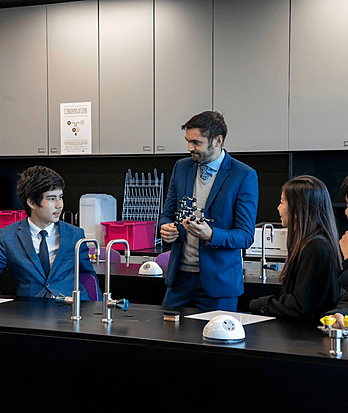
A-level Physics enables pupils to explore the complexities of nature and its fascinating beauty. In the Lower Sixth, pupils study core topics like current electricity, waves, mechanics, and materials, while also delving into modern physics, including quantum phenomena and particle physics. In the Upper Sixth, more abstract concepts of classical physics are explored, such as gravitational, electric, and magnetic fields, advanced mechanics, electrical circuits, and thermodynamics. A key focus of the course is experimental work in our university-standard laboratories, where pupils learn new techniques to analyze mathematically complex physical relationships.
Psychology
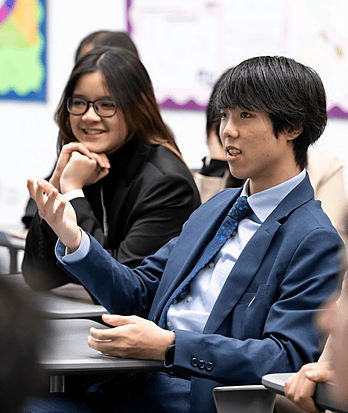
A-level Psychology offers an exciting and broad exploration of human behavior, from the activity of a single nerve cell to our interactions in a complex sociocultural environment. The course is intellectually stimulating and personally enriching, encouraging pupils to expand their perspectives, challenge assumptions, and think critically about contemporary issues. Topics include social influence, memory, and psychopathology, with pupils studying the five main psychological approaches and gaining a deep understanding of research methods. This journey not only enhances academic knowledge but also encourages personal growth and critical thinking.

Spanish
A-level Spanish allows pupils to contribute to discussions on the literature, film, art and history of the Hispanic world and participate in debates, give presentations and read Spanish articles from authentic sources. Studying highlights of Spanish-speaking artistic culture, heritage and cinema and learning about who wields political power in the Spanish-speaking world, pupils also explore the influence of the past on present-day Spanish-speaking communities. Our pupils learn the language in the context of these communities, with many opportunities for trips to Spain to enhance their linguistic competency.
As a Brighton College School, we are proud that our pupils go on to study at many of the top universities around the globe including Oxbridge and world-class universities in North America.